
Lens Antenna Technology
Designed like no other, to perform like no other, and deliver like no other.

The Aha! Moment
Using a refracting lens for RF signalling has existed for decades but the bulky, heavy materials for the dielectric made it commercially impractical. In 2006, MatSing engineers developed a patented, lightweight dielectric metamaterial that created superior beam performance and isolation while weighing about 10x less than conventional dielectrics. This enabled the world’s first commercial, lightweight, multi-beam lens antennas.
Natural Refraction vs. Electronic Steering
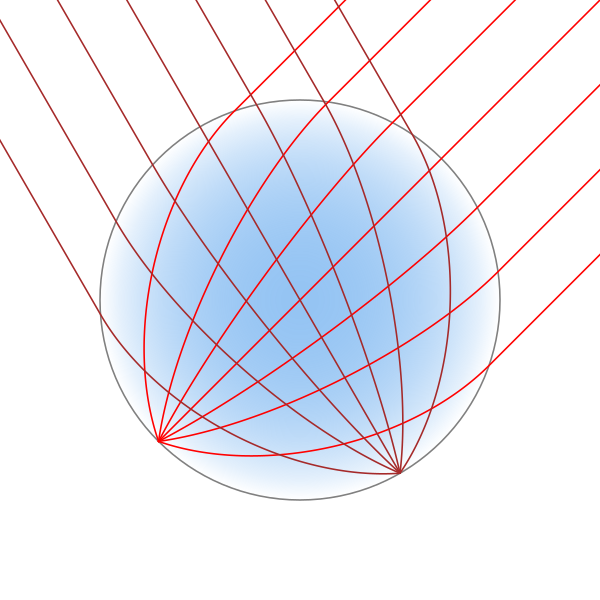
Just as a magnifying glass or the human eye bends light rays to magnify and focus an image, a MatSing RF lens bends and focuses electromagnetic waves. Incoming and outgoing signals are naturally refracted at controlled angles without relying on reflection (as in parabolic dishes) or active electronic phase-shifting (as in traditional phased arrays). Because it relies purely on physics rather than electronic manipulation, the lens natively shapes RF waves into highly focused, highly isolated beams.
Up to 48 Beams Per Antenna
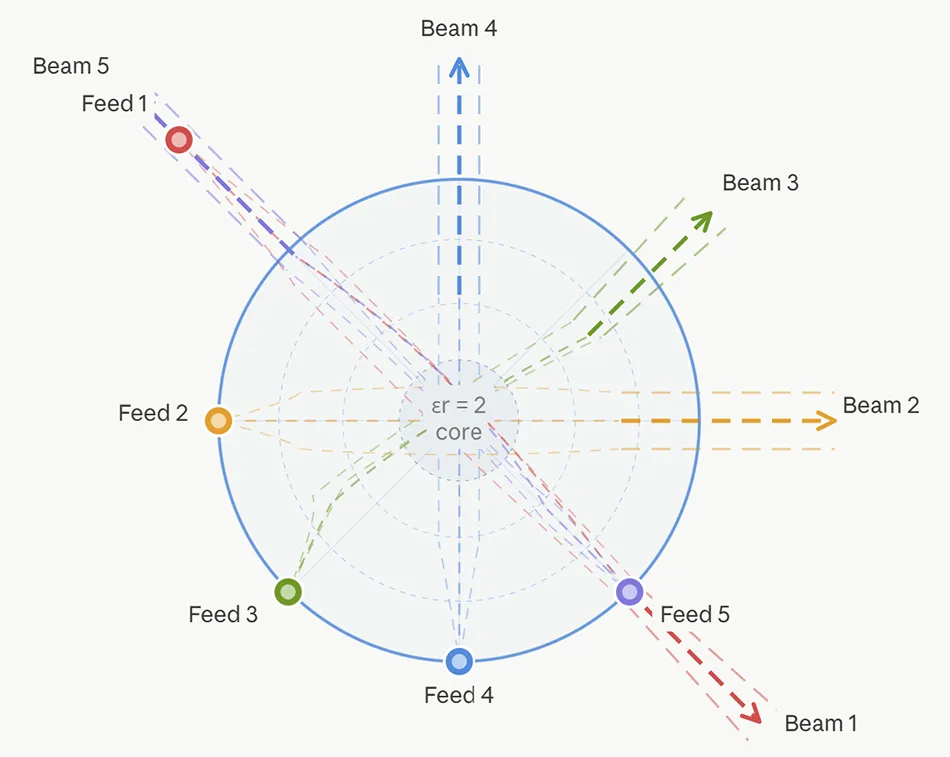
Highly isotropic and symmetrical, MatSing lenses precisely focus waves received from any direction to the opposite side of the lens. This enables operators to place dozens of radiating elements around a single lens, creating up to 48 independent, high-isolation beams that do not interfere with one another. As a result, carriers can drastically increase capacity, reduce co-channel interference, increase frequency reuse, achieve 95% beam efficiency, and support 4×4 MIMO on each beam.
Efficiency Across the Board
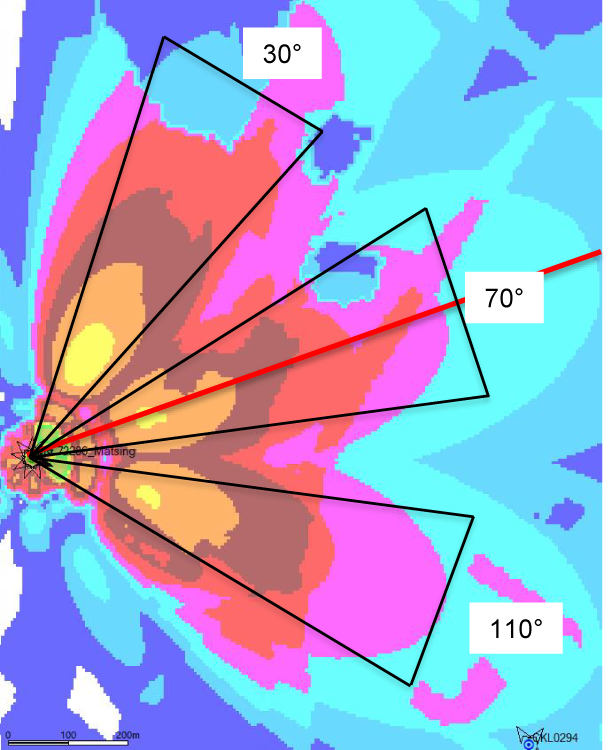
Free from the constraints of digital beamforming or electronic beam steering, operators can create pinpoint coverage zones, dynamically add or swap radios without swapping out the physical antenna, and dramatically increase capacity through massive sectorization. A single MatSing antenna site can provide up to 4x the capacity of traditional panels, and in large venues, a single multi-beam lens can replace hundreds of individual dishes.
Spectrum Efficiency
95% beam efficiency
High frequency re-use
Less interference
Up to 48 beams per antenna
Space Efficiency
Fewer antennas needed
Less infrastructure
Faster deployment
Lower CapEx costs
Cost Efficiency
Lower deployment costs
Faster service turn-up and ROI
Reduced maintenance costs
Lower material costs
Environmental Efficiency
Lower power consumption
Fewer truck rolls
Less GHG emissions
Reduced mined materials
Customer-based Testing and Validation
MatSing lens antennas not only meet or exceed industry standards like NGMN BASTA, AISG 2.0, and applicable ISO standards, 9001; they are also designed, tested and pre-certified by the major carrier to be deployed directly without separate safety and compliance testing.
Positively Impacting the Network and Environment
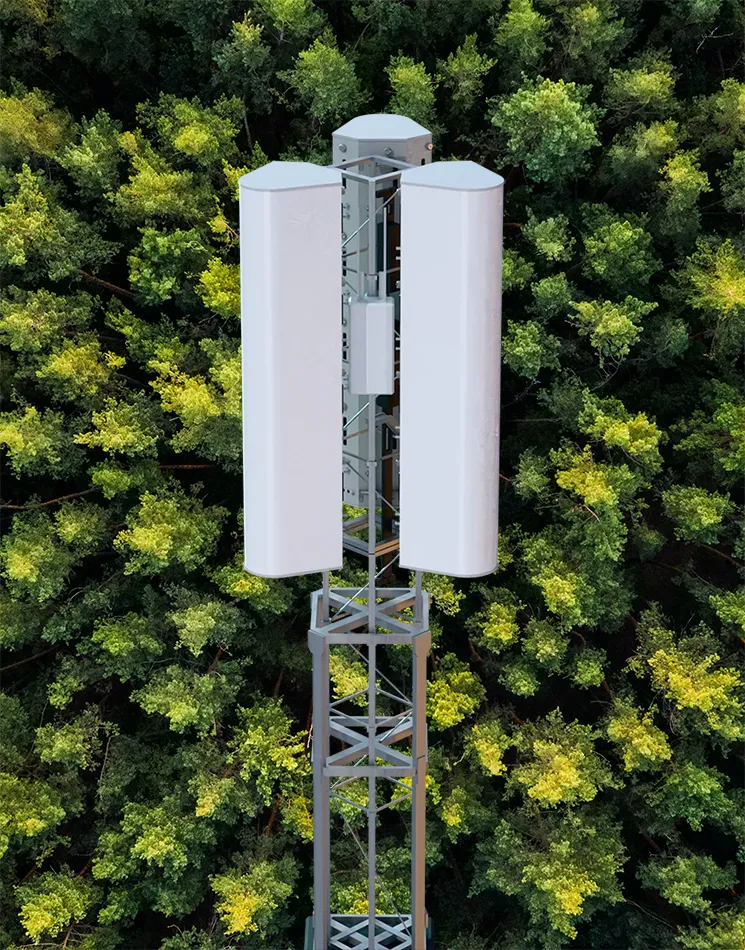
MatSing Lens antennas are engineered for efficiency at every level, delivering high capacity performance with fewer antennas, lower power consumption, and reduced greenhouse gas impact across deployments. By replacing large clusters of traditional antennas with a smaller number of high performance lens platforms, operators can shrink energy use, simplify infrastructure, and support more sustainable network designs.
We also prefer to partner with suppliers and distributors who share our concern for the environment by actively maintaining a robust, audited ESG strategy. This helps ensure that the deployment and logistics surrounding our state-of-the-art lens antennas align with the current state of the environment and the industry’s efforts to protect it.