
MatSing and KT Corp Successfully Test New SuperCell HAPS Solution

In September 2025, South Korean mobile provider, KT Corporation, and MatSing conducted a successful field test of a new high-altitude cellular solution. The results have significant implications as the mobile industry confronts the challenges of the global digital divide, disaster recovery and the coming era of 6G communications.
The field test combined KT’s next-generation non-terrestrial network (NTN) technology and MatSing’s low-frequency Multi-Beam Cylindrical (MBC) base-station lens antenna to create a high-altitude platform station (HAPS) known as SuperCell.
A helium balloon was used to position the base station equipment and antenna about 20 to 50 kilometers over the earth, above commercial aviation but below low-earth-orbit (LEO) satellites. At this altitude, SuperCell acts as a bridge between LEO satellites and mobile users on the ground, providing lower latency, higher capacity and better coverage than a direct-to-satellite connection. Compared to a conventional terrestrial macro network, SuperCell delivered the same level of coverage using 80% fewer base stations.
“Compared to a conventional terrestrial macro network, the SuperCell solution delivered the same level of coverage using 80% fewer base stations.”
The role of advanced lens antenna technology
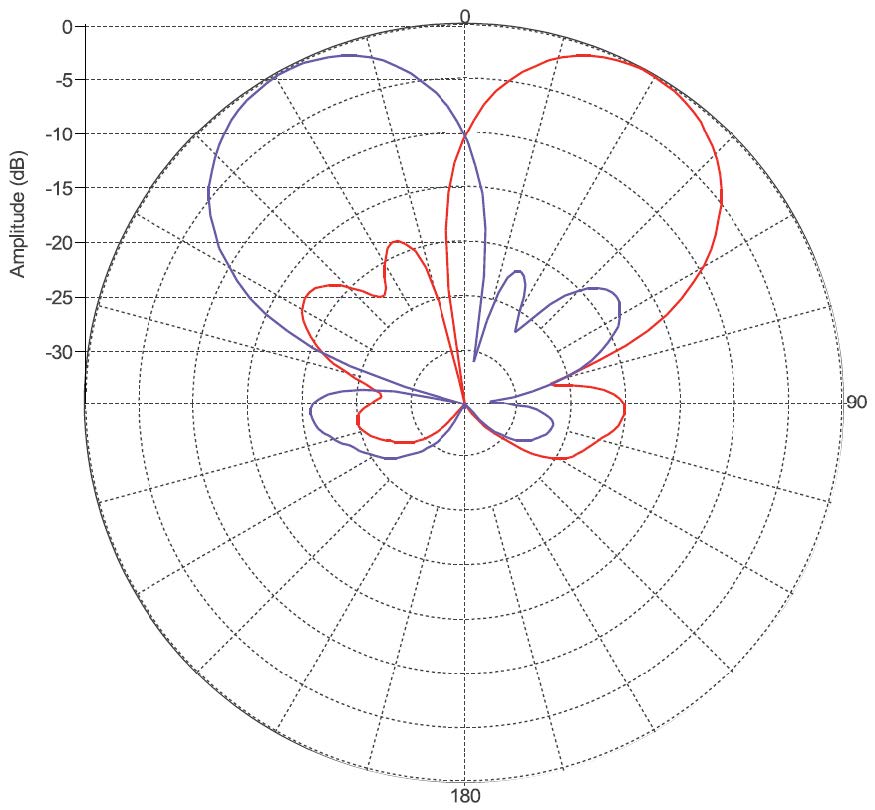
A key to SuperCell’s performance is MatSing’s passive lens technology. It focuses radio waves like a magnifying glass, significantly increasing signal range and efficiently amplifying multidirectional reception signals. This allows for stable coverage over a much wider area than conventional antennas. The specific antenna used, the MS-MBC-2-L2-15, features two isolated 698-960 MHz, cross-polarized beams. Each beam has two ports to support 2X2 multi-in-multi-out (MIMO) functionality. Smart bias tees and AISG 2.0 cable assemblies support a remote electrical tilt (RET) range of 2°-16° for each beam.
The MBC-2-L2-15 is one of 19 multi-beam cylindrical lens antennas in MatSing’s MBC portfolio. The MBC family offers single-band, dual-band and tri-band solutions for frequency ranges from 470 mHz to 3700 mHz. Key applications include macro networks and public safety. All MatSing antennas incorporate advanced lens technology optimized for high-capacity and cost-efficiency.
Addressing critical applications
The SuperCell’s design and capabilities make it valuable for a range of critical use cases. Unlike a geostationary satellite, the solution is highly mobile, meaning it can be easily repositioned to provide high capacity network coverage wherever it’s needed. This includes connecting areas that have been devastated by natural disasters and have no traditional cell service. SuperCell can also aid in the global fight to bridge the digital divide. The antenna’s well-defined wide coverage patterns expand at higher altitudes, enabling SuperCell to cover large rural areas which are currently underserved or not served.
But perhaps the most intriguing application of SuperCell may be the enablement of 6G, which may be ready for commercial deployment as soon as 2030. 6G will demand peak data rates over 1 Tbps, near-zero latency, ubiquitous connectivity, and extreme reliability. With a focus on native AI/ML and integrated sensing, network capacity will be a critical requirement.
KT is currently working on 6G radio development in separate partnerships with both Samsung and Nokia. When deployed in combination with 6G radios, MatSing’s lens technologies will enable the new 6G radios by focusing extremely high-frequency (THz) signals, providing the high gain and narrow beam patterns needed to support 6G’s requirements for long-range, high-resolution sensing and imaging, and massive data rates.
To learn more read the article.

Leave a Reply
Want to join the discussion?Feel free to contribute!